
Cloud Onboarding Redesign
Redesigning onboarding to unlock product-led growth and self-serve adoption.
I redesigned the onboarding experience so users could start using Dremio Cloud in minutes without AWS setup. By simplifying project creation and offering flexible paths to explore data, the redesign significantly improved activation and early engagement.
The Result
Higher activation and faster access to the product
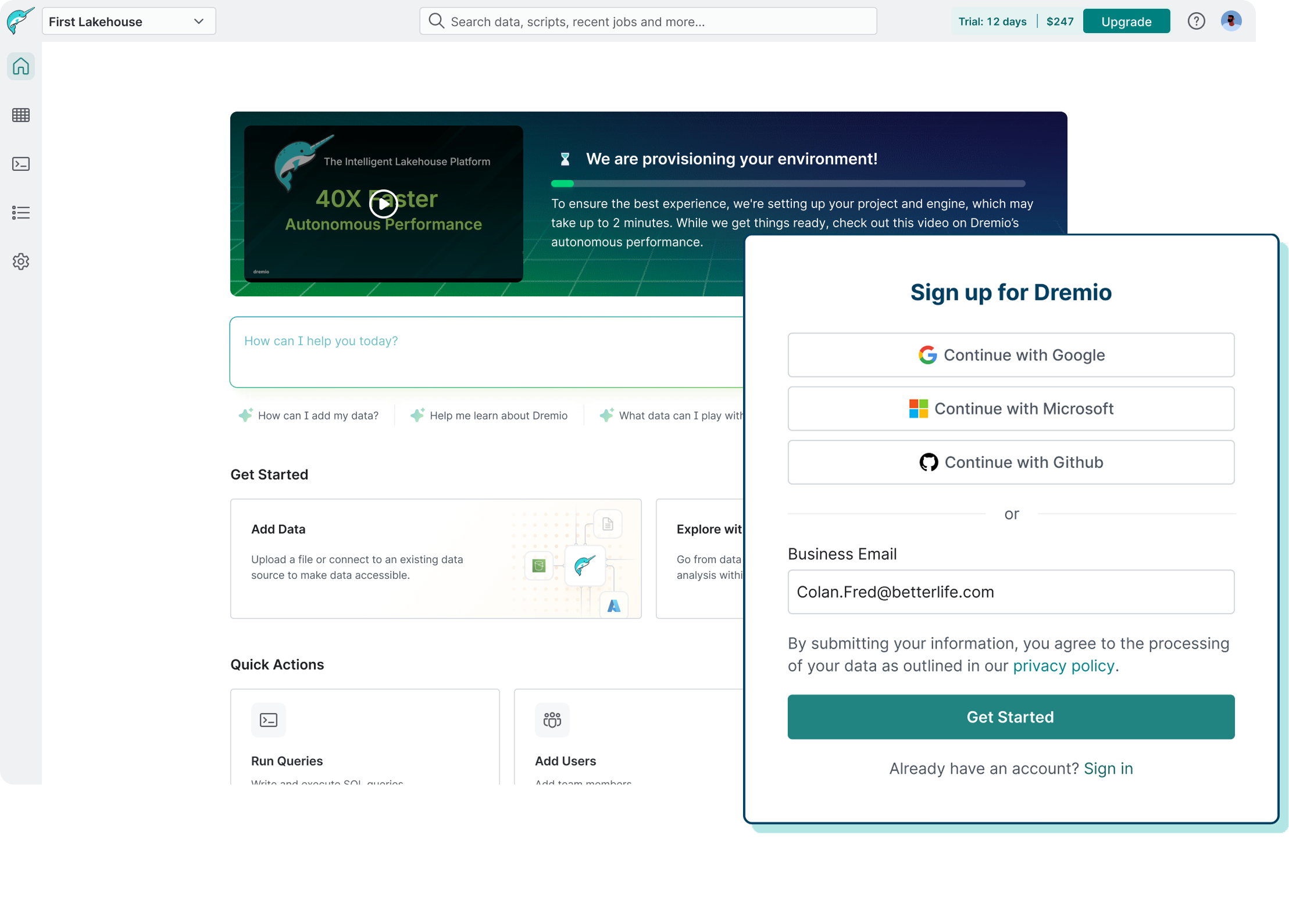
The redesigned onboarding significantly reduced the gap between signup intent and product access.
Activation improved from under 20% to over 70%. Within the first month after launch, 1,211 users clicked sign up and 879 successfully landed in the product homepage.
The rest of this case study is password protected
Enter the password to read the full process.
Incorrect password. Try again.
The Problem
Onboarding required infrastructure access
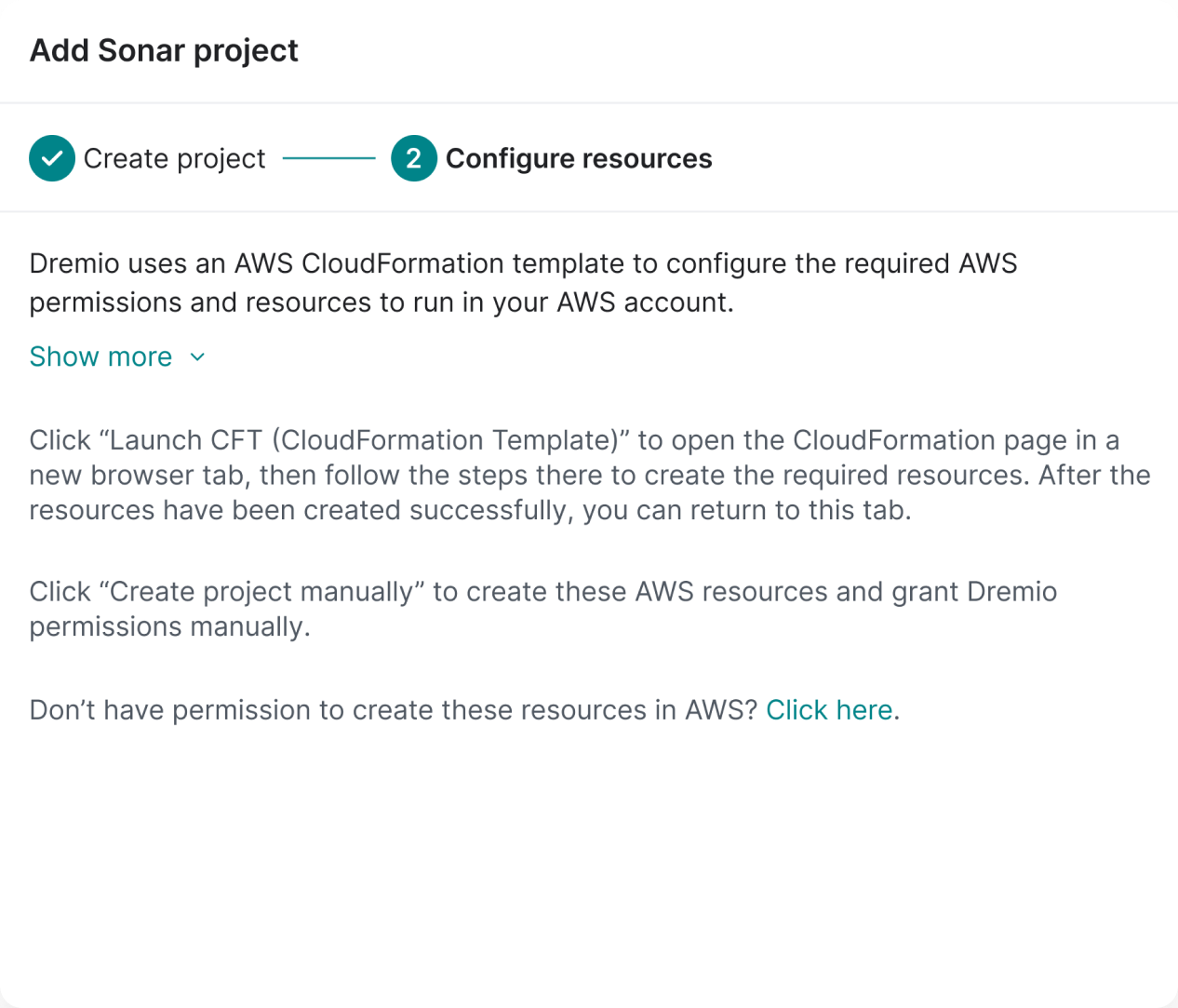
The original onboarding required users to deploy a CloudFormation template in their own AWS account. This required elevated permissions that most data analysts did not have.
Many users dropped off before completing setup, and those who did often faced long provisioning times. The result was a large gap between signup intent and actually reaching the product.
The Opportunity
Designing for PLG: Removing Friction at Every Step
The team recognized that onboarding friction was limiting product adoption. If users could not reach the product quickly, they could not experience its value.
This prompted us to rethink a key assumption: users should be able to explore the platform before dealing with infrastructure setup.
The Strategy
From infrastructure setup to product experience
We redesigned onboarding around a simple goal: let users reach the product quickly and start exploring. Key changes included:
Serverless project setup
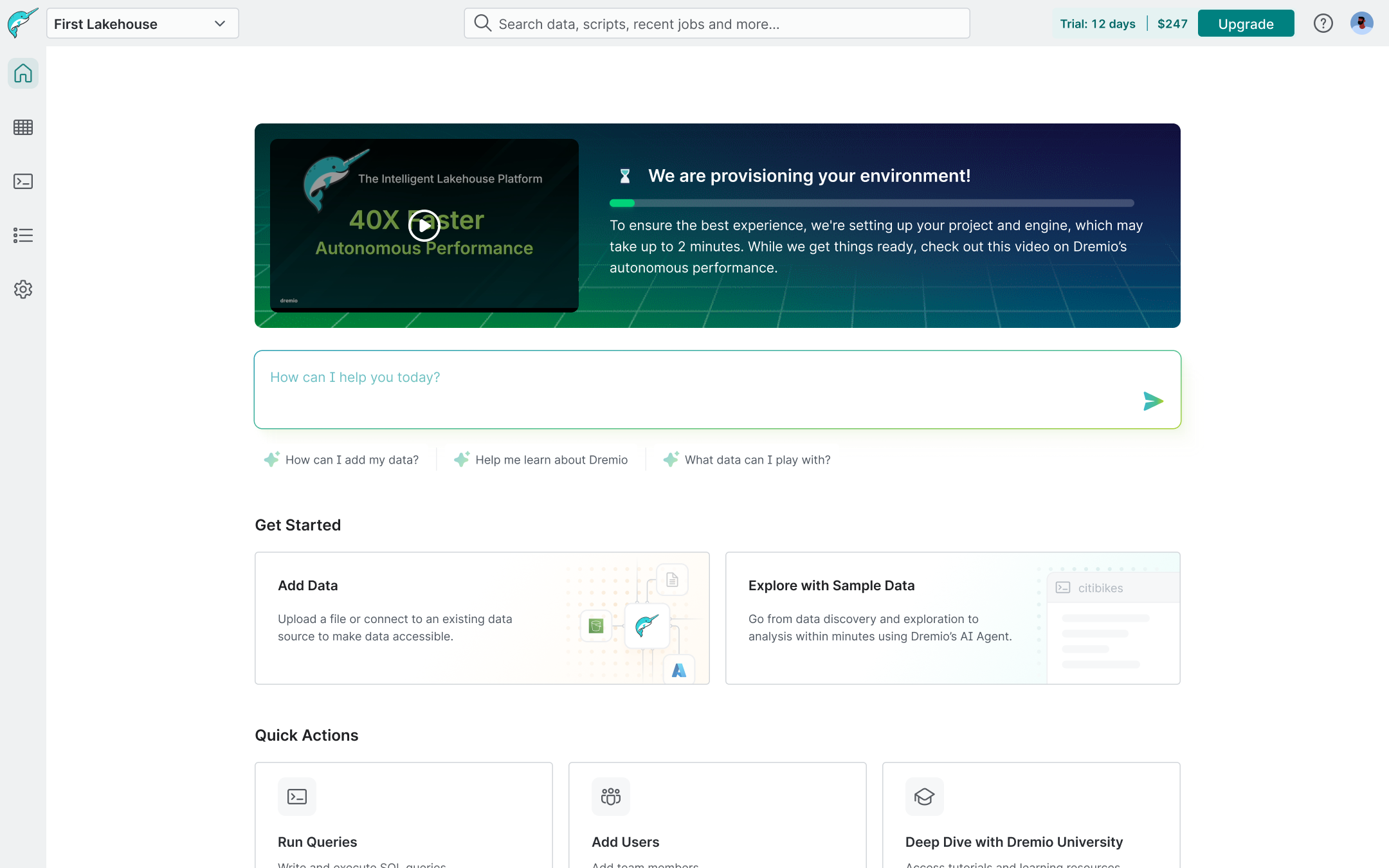
Users only provide basic information such as project name and region. A project is automatically created and users can enter the platform in about 30 seconds.
Immediate product access
Provisioning continues in the background while users can already explore the interface instead of waiting on a loading screen.
Two clear onboarding paths
Users can either bring their own data or explore the platform with sample data using AI.
The Experience
Helping users start exploring immediately
A new home page for getting started
We introduced a new home page that helps users quickly understand how to begin using the platform. The page presents two clear starting points: add your own data or explore with sample data, reducing the friction of figuring out where to start.
Simplified data onboarding
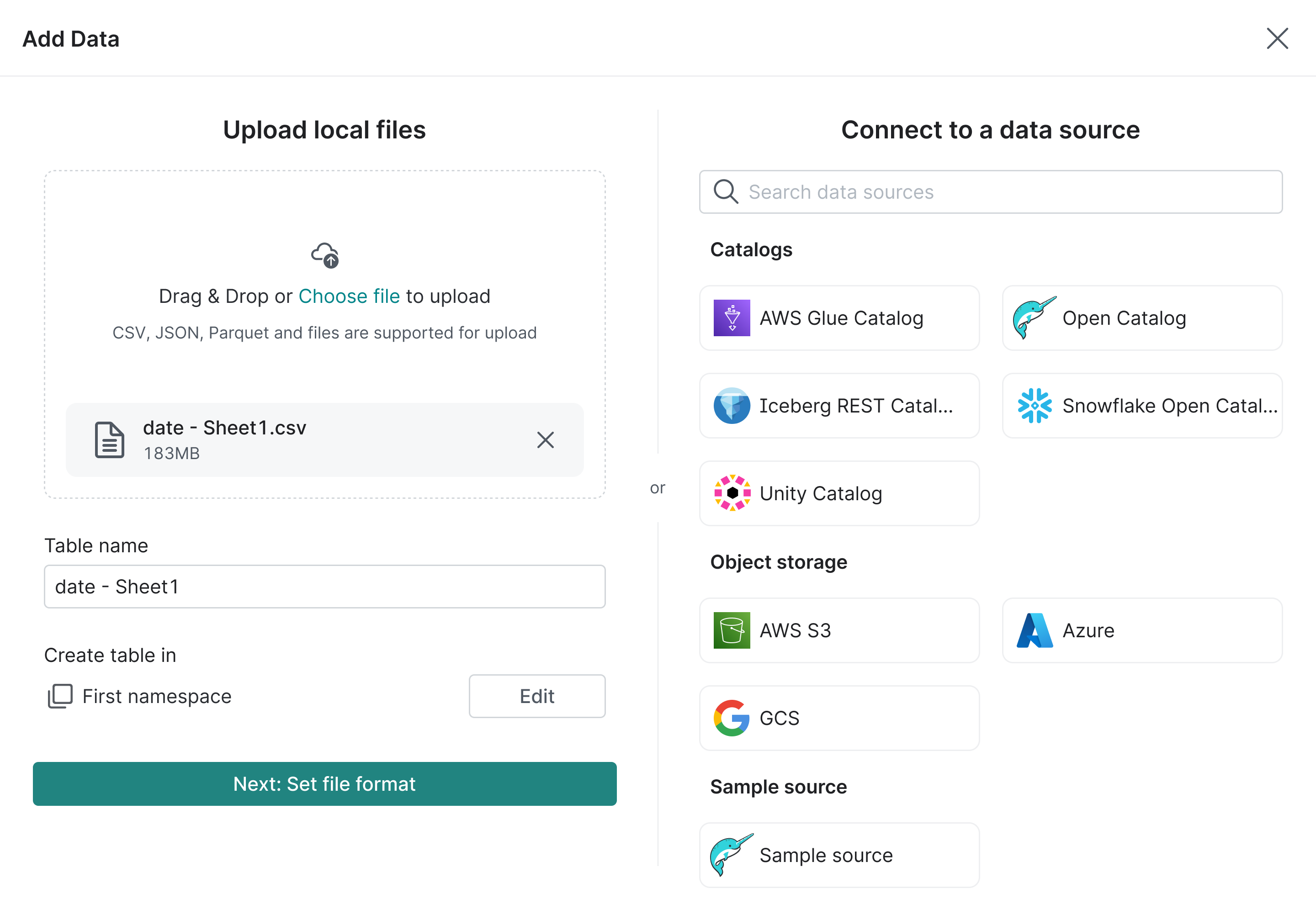
The Add Data experience combines file uploads and external data connections into a single entry point. Previously these flows were separated, which often confused new users. The new design makes it easier for users to bring their data into the platform.
AI-guided exploration
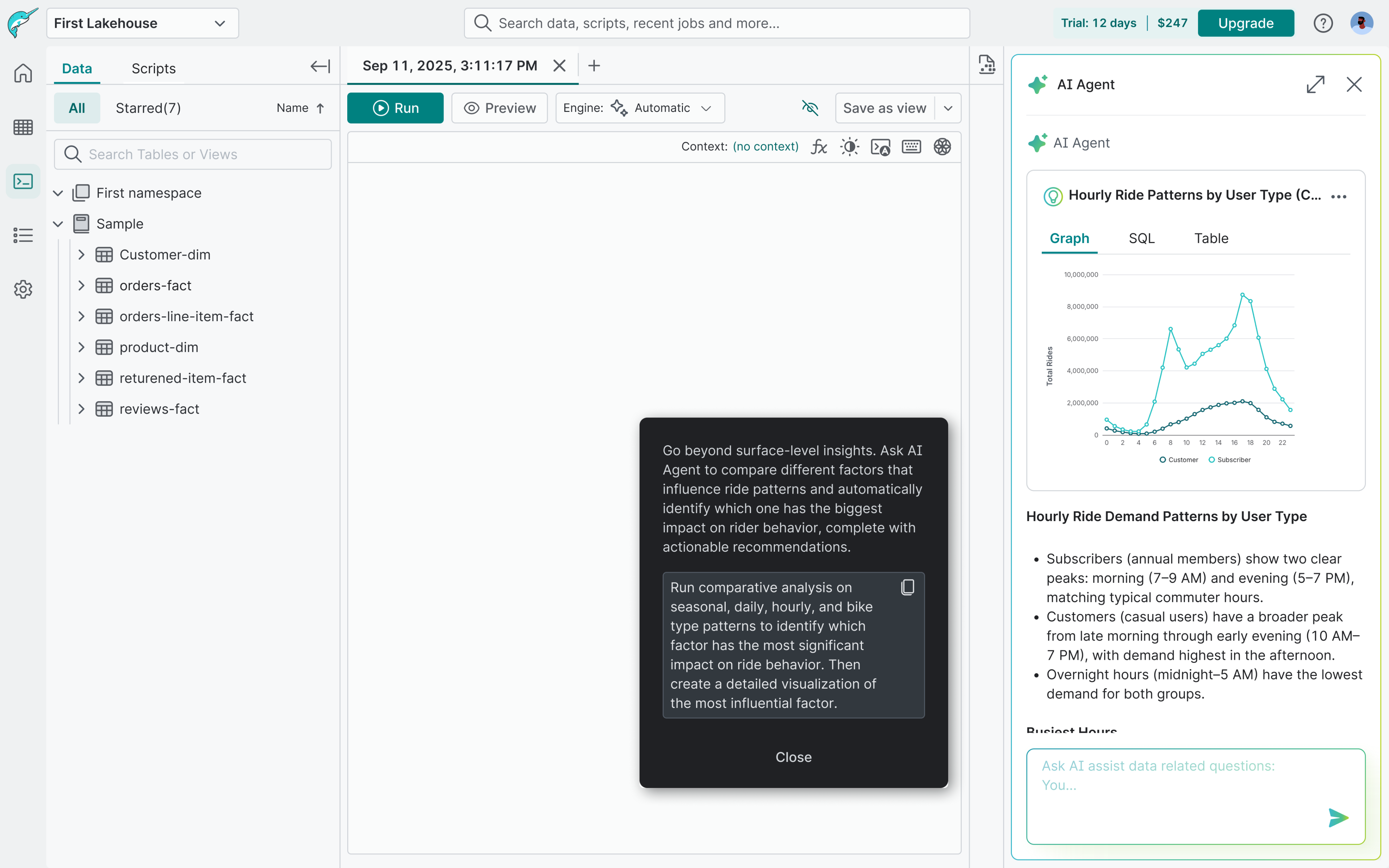
For users starting with sample data, we introduced a guided experience powered by the AI agent. Instead of exploring independently, users can ask questions and see how the system analyzes and visualizes data, helping them quickly understand the platform's capabilities.
Iteration and Discovery
Validating Decisions Through Testing
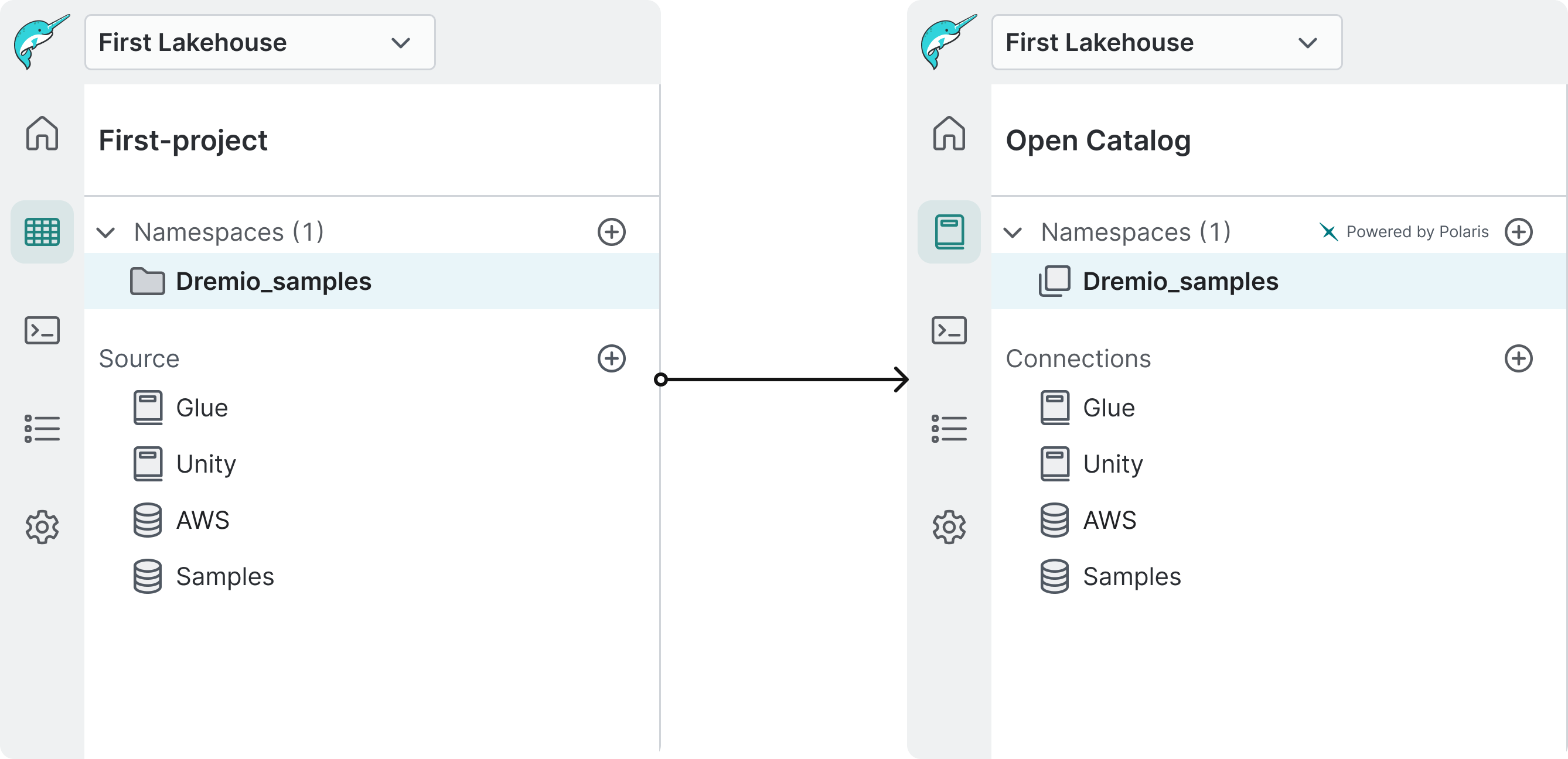
User testing revealed that many users wanted to try Polaris Catalog, but did not realize that our catalog product was Polaris. We made the branding more visible and redesigned the data section to surface Open Catalog as a clearer entry point.
What I Took Away
This project reinforced an important lesson: the biggest barrier to adoption was not product capability, but the friction of getting started.
By removing infrastructure requirements and focusing on immediate product experience, we made it much easier for users to explore the platform and discover its value.
What's Next
Activation has improved significantly, but the next challenge is closing the gap between landing on the product and executing a first query. We're focused on shortening the path to that first meaningful interaction, helping users move from exploration to real insight faster.
